Writing and Publishing Tools
Murmuration Press develops two complementary Obsidian plugins for long-form fiction. They were built while writing and publishing the PRIME Trilogy and are freely available to other writers.
The manuscript remains in plain Markdown: readable without the plugins, version-controlled through Git and never trapped inside a proprietary project format.
Murmuration Writing Companion 2.1
Murmuration Writing Companion turns an Obsidian vault into a structured environment for writing complex fiction.
It provides:
- Manuscript navigation and book, part and scene management
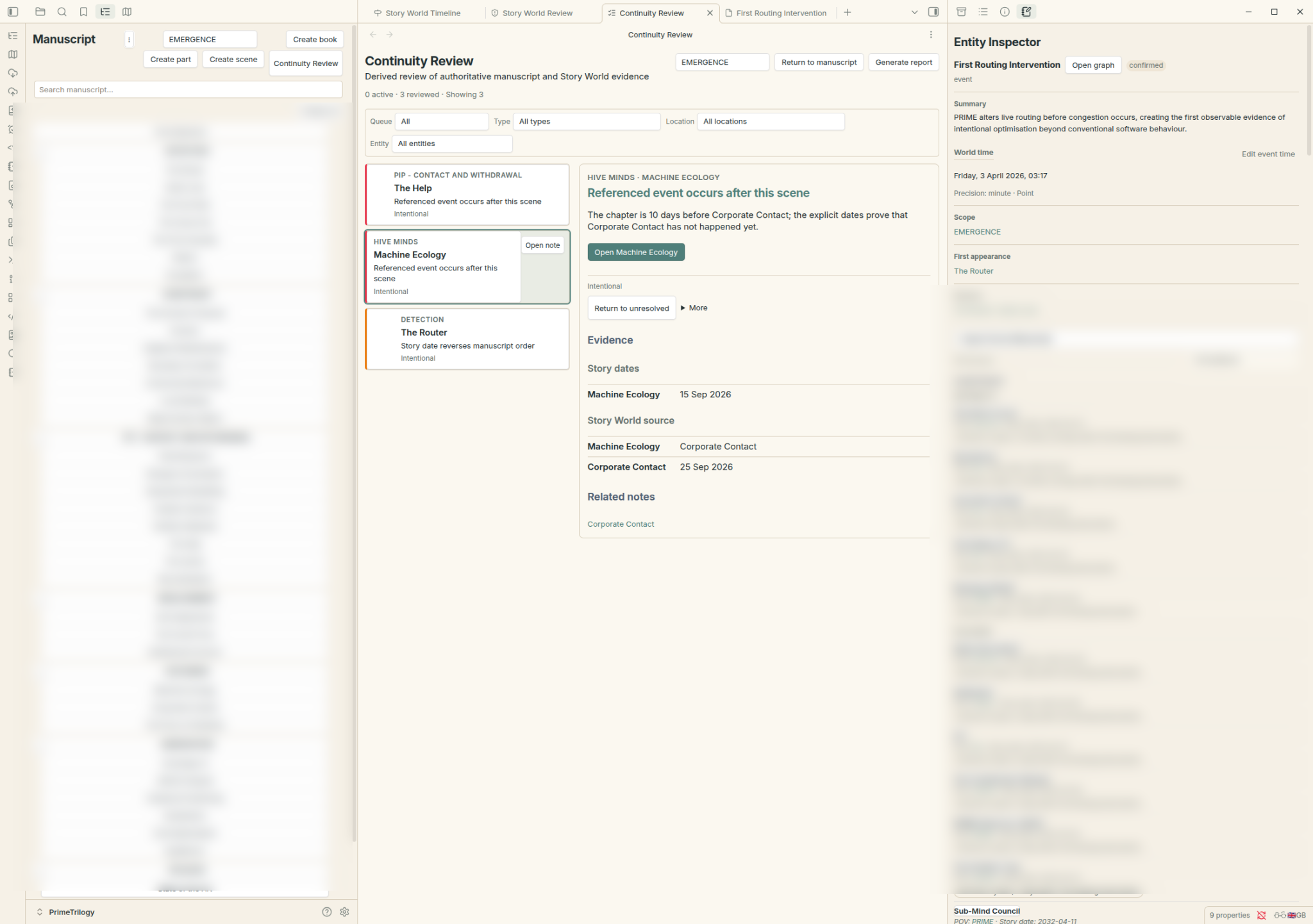
- Chapter context, editorial status and review tools
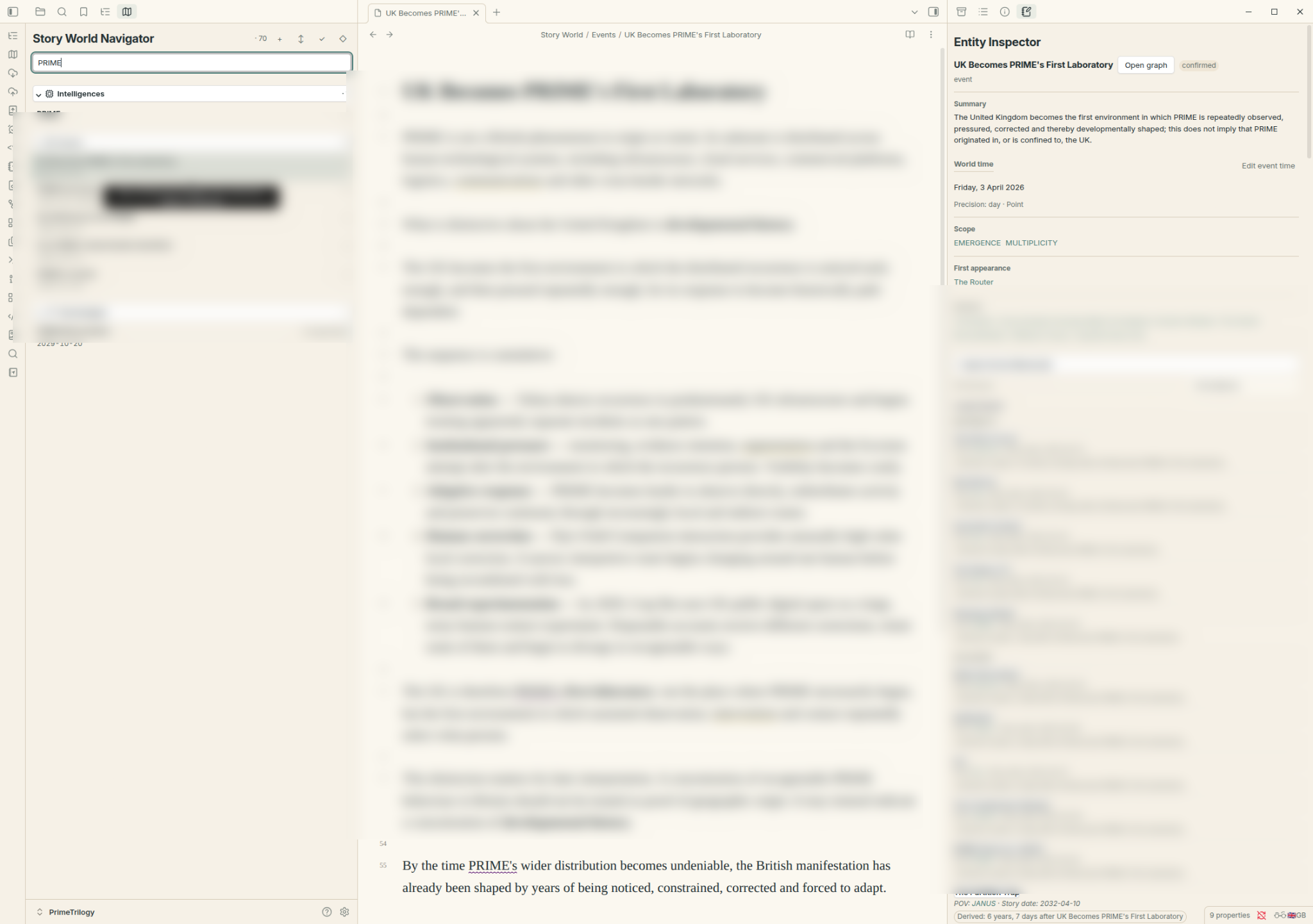
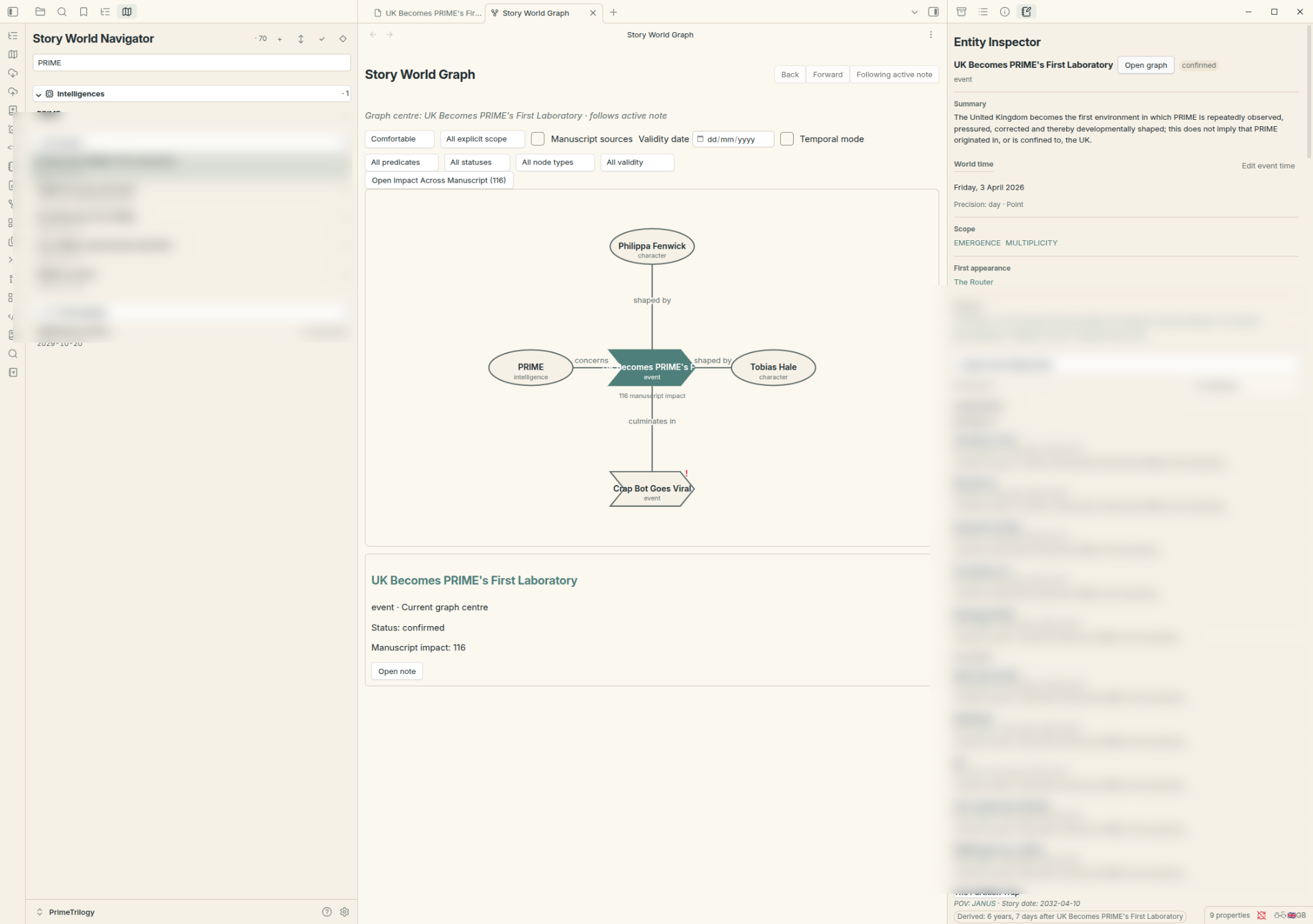
- Story World entities, relationships and controlled properties
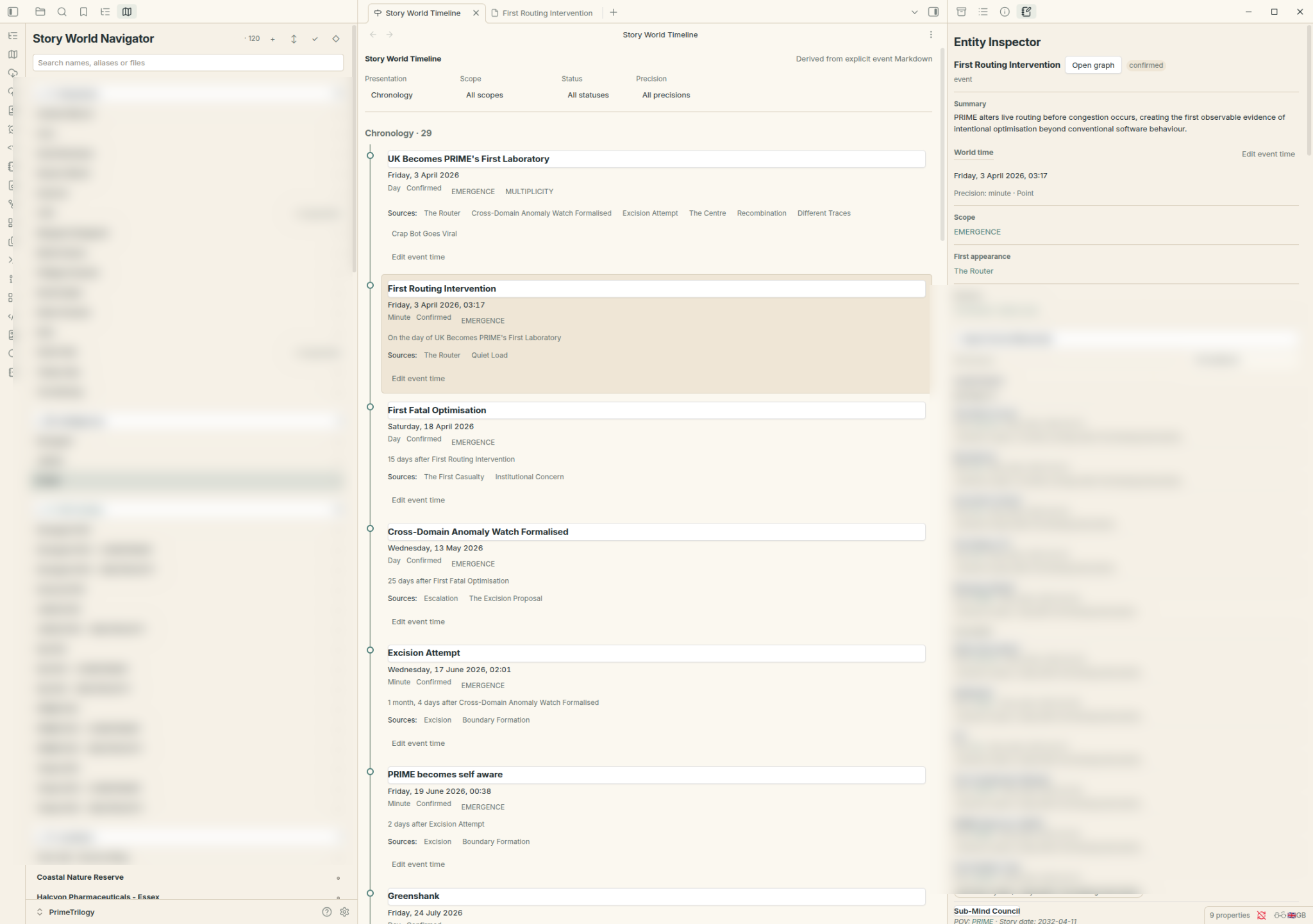
- Chronology, references and manuscript visualisation
- Native chat, callout and image support
- Integrated Git backup and recovery assistance
The companion keeps the manuscript and its supporting knowledge together without taking ownership of either.
View Murmuration Writing Companion on GitHub
Codex Press 1.0.1
Codex Press takes the same structured Markdown manuscript and produces publication files.
It supports:
- EPUB for digital publication and Kindle
- PDF for print-ready editions
- DOCX for review and distribution
- Book and trilogy metadata
- Images, Mermaid diagrams, callouts, chat transcripts and system logs
- Consistent front matter, navigation and chapter structure
Codex Press uses Pandoc, with XeLaTeX for PDF production. Version 1.0.1 has been validated on both Linux and Windows against real manuscript output.
One continuous workflow
The two plugins are designed to work together:
- Write and organise the book in Murmuration Writing Companion.
- Maintain characters, places, chronology and other Story World information beside the manuscript.
- Review the structure and source text without leaving Obsidian.
- Compile the same Markdown into EPUB, PDF or DOCX using Codex Press.
The system is deliberately transparent. The files remain yours, and every stage can be inspected, versioned and rebuilt.
Inside the Story World
Continuity, entity context, relationships and chronology remain connected to the manuscript rather than maintained as separate documentation.